
AKCP PRODUCT FAMILY
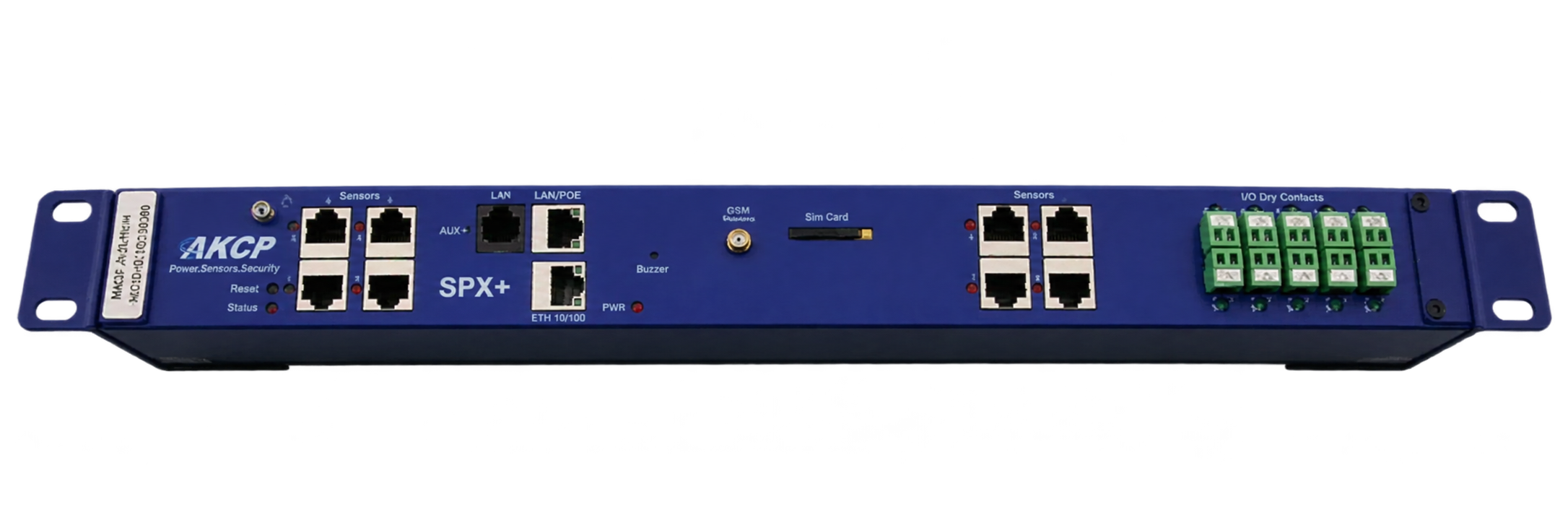
sensorProbeX+
Modular and Scalable MonitoringSuitable for installations requiring additional sensors and flexible I/O options.
Product Technical Information ↗Combine AKCP Thermal Map sensors, power and security monitoring solutions and Quicklime sensorCFD AI to monitor critical infrastructure, identify hot spots and improve cooling efficiency.
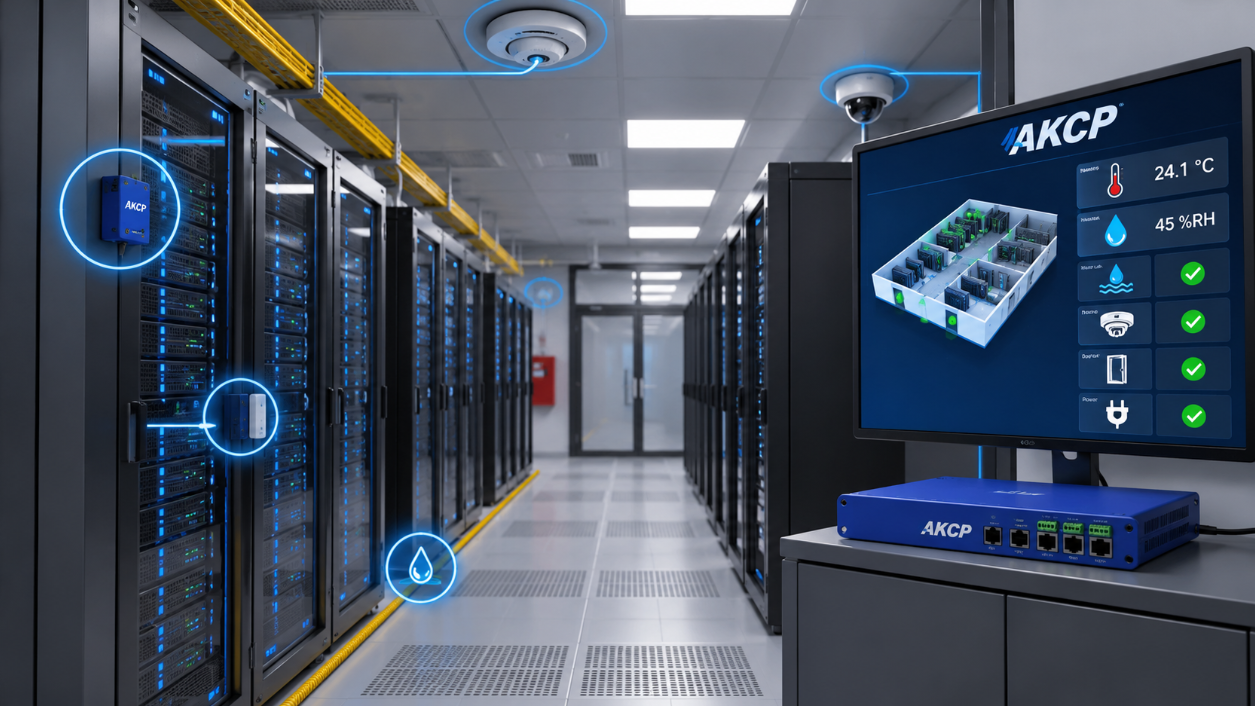
A single room temperature measurement is not enough. Combining rack inlet and outlet temperatures, power consumption, airflow, water leaks and physical access data helps identify operational risks and energy losses earlier.
This is an interactive demonstration. Values are illustrative; no live data is retrieved from a real facility.
AI workloads can increase power density to 30 kW or more per rack. Room temperature alone is therefore insufficient; server inlet conditions and airflow distribution should be monitored separately.
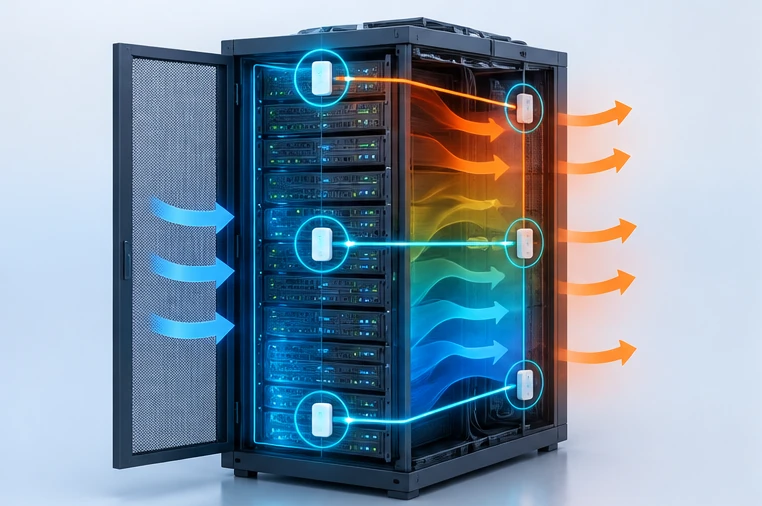
AKCP Thermal Map sensors measure top, middle and bottom levels at the front and rear of each rack. Two-dimensional heat maps generated from six measurement points help identify hot spots and uneven temperature distribution.
Monitoring front-to-rear temperature differences helps identify blocked airflow paths, inadequate airflow and server fan failures.
When temperature thresholds are exceeded, teams can be notified via local sirens, SNMP traps or SMS. Measurements can be integrated with BMS and DCIM platforms.
AKCP cites a general server inlet range of 18–27°C and a narrower 18–22°C range for high-density H1-class clusters. Appropriate operating limits must also consider equipment class and manufacturer requirements.
Continuous sensor data supports regular improvements to cooling settings and temperature distribution rather than merely generating alarms.
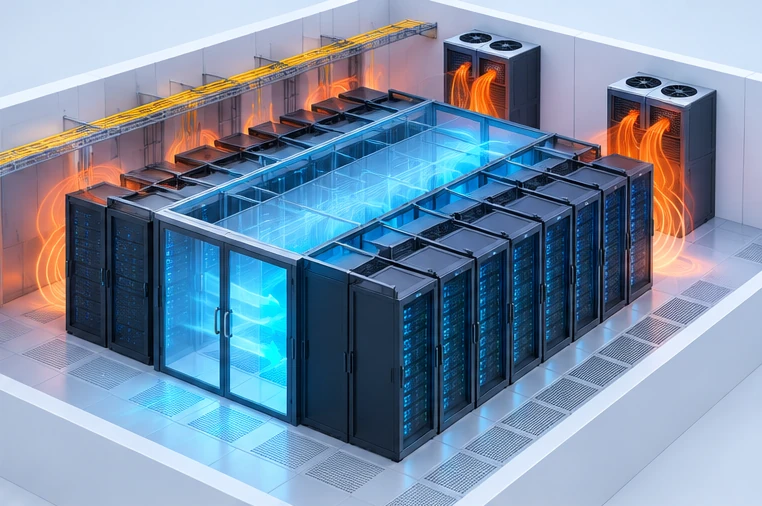
When cooled air returns directly to a CRAC unit without passing through servers, cooling energy is wasted and usable capacity decreases.
When hot server exhaust reaches the inlet side again, localized hot spots can form without being apparent from room-level readings.
Quicklime sensorCFD AI associates readings from multiple areas with a 3D data center model to provide operational airflow and thermal analysis.
Supports evaluation of variable-speed fan adjustments, hot/cold aisle containment and identification of overcooled zones.
The aim is to reduce unnecessary cooling while maintaining safe inlet temperatures, unlocking stranded cooling capacity and lowering PUE.
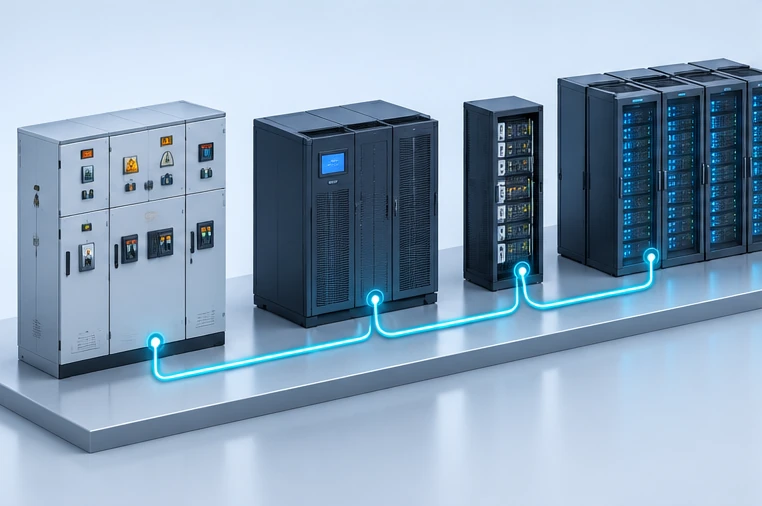
Combining data from mains feeds, UPS units, PDUs, distribution circuits and individual server power cables provides a holistic view of power infrastructure.
AKCP Contactless Current Meter uses magnetic-field sensing to measure current without modifying cables, enabling monitoring expansion without planned downtime.
AI and GPU workloads can cause sudden increases in power demand. Tracking these changes helps address circuit loading and power-distribution imbalances early.
Unused power headroom can guide rack density planning; warnings and, where supported, load-reduction actions can help prevent circuit-breaker trips.
Quicklime analysis may help identify equipment consuming power without delivering useful work, supporting energy-use reviews.
What-if scenarios, such as adding new GPU clusters to a row or a second UPS failing, can be evaluated through the Power Train model.
PUE is the ratio of total facility energy to IT equipment energy. Real-time monitoring provides a more reliable measurement basis for efficiency and ESG reporting.
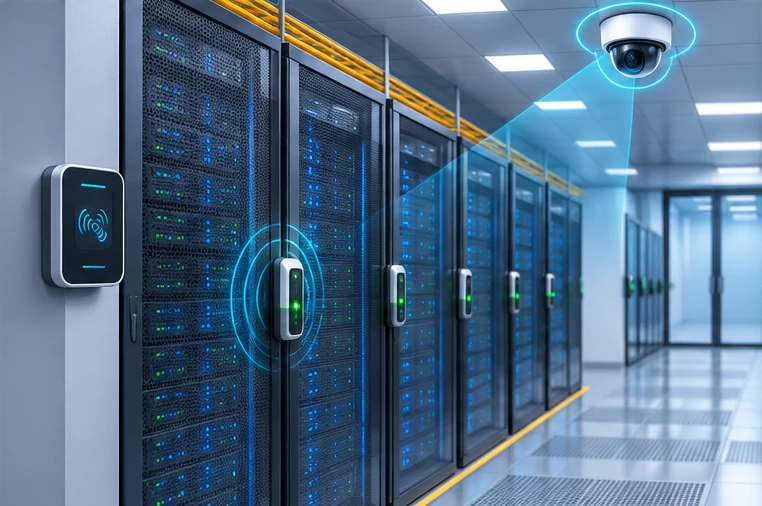
AKCP RFID Swing Handle locks can define rack-level access permissions. The source describes two-factor scenarios combining an RFID card and PIN.
A rack door left open is not just a security risk; it can disrupt airflow. Access timestamps can be compared with subsequent temperature increases.
Linking water leak or unauthorized-access alarms to camera footage helps investigate when and where incidents occurred.
Motion and vibration sensors can monitor unauthorized interference, physical shocks and events affecting equipment security.
In multi-tenant facilities, only authorized technicians should access designated racks, and access history should be retained.
Central logs can answer who opened which rack, when, and how environmental conditions changed. They may support preparation for ISO 27001, SOC 2 and NIS2 audits, but do not themselves guarantee compliance.
ASHRAE commonly recommends a server inlet air range of 18–27°C. Narrower ranges may apply based on equipment class and manufacturer requirements.
PUE is the ratio of total facility energy consumption to IT equipment energy consumption. A value of 1.0 is the theoretical ideal; lower PUE generally indicates more efficient energy use.
Although requirements vary, around 40–60% relative humidity is a common operating band. Dew point and equipment requirements should also be monitored.
It continuously tracks temperature, humidity, airflow, power, water leaks, smoke, vibration and physical access.
Bypass occurs when cold air returns to the cooling system without passing through servers. Recirculation occurs when hot exhaust air reaches server inlets again. Both can reduce efficiency and thermal safety.
AKCP describes contactless current monitoring as a method that can be installed without modifying existing wiring. Qualified personnel must follow electrical safety requirements and manufacturer instructions.
AKCP references a narrower 18–22°C inlet range for high-density H1-class clusters. Final limits depend on the equipment specifications.
Yes. Authorized rack access, door states, sensor readings and camera footage can be reviewed on the same timeline to investigate causes more quickly.
Technical content source: AKCP Data Center Monitoring and Optimization










































Global brands selected from the shared reference archive; these are not a list of Teknoans direct customers.View All References ↗
The following product families may be considered for this solution. Final selection depends on measurement points, sensor count, cable routing, communications and alarm requirements.
Suitable for installations requiring additional sensors and flexible I/O options.
Product Technical Information ↗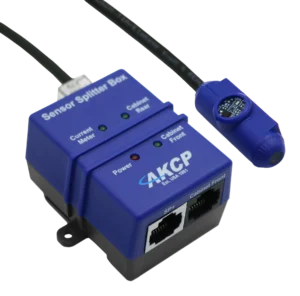
Monitors temperatures at different rack heights to help identify hot spots and airflow problems.
Product Technical Information ↗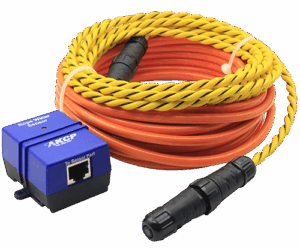
Helps detect leaks under raised floors, around cooling units and in areas at risk of water ingress.
Product Technical Information ↗
Used to incorporate electrical measurements into the monitoring system when suitably configured.
Product Technical Information ↗Product photographs and technical details are sourced from official AKCP product pages. Compatibility, options and licenses should be verified before deployment.
Share your project and technical requirements.